Хинди
*
Лаоалбански.
Амхарски
Арменски?
азербайджански
Беларуски
Бенгалски
Босненскибългарски
СебуаноЧичева
корсиканскиviscosity of rubberХоландски
естонски
Филипински
Финландскифризийски
галисийскигрузински
Гуджарати
хаитянски
Хауса
хавайски
Иврит
ХмонгУнгарскиИсландскиИгбоЯвански
Каннада
казахскиrubber processingкюрдски
КиргизскиЛатински
ЛатвийскиЛитовски
Люксембург...Македонски
Мадагаскарски
Малайски
Малаяламмалтийски
МаориМаратхи
Монголски:бирманскиcНепалски
норвежки
пущунски
Персийски
ПенджабскисръбскиСесотоСинхалски
Словашкисловенскиrubber processing.
СамоанскиШотландски галски
ШонаСиндхи
сундански
Суахили
таджикскиТамилски
Телугутайландски
украински
Урду
узбекскиВиетнамскиУелски

Кхоса
Идиш
Йоруба
Зулу
Киняруанда
Татарски
ОрияТуркменскиУйгур
Mixing/Kneading: Optimizing additive dispersion, shear control, energy use.
The goal of the mixing stage, typically performed in an internal mixer, is to achieve a uniform, homogeneous dispersion of the polymer, reinforcing fillers, and processing aids while meticulously controlling the compound's thermal and shear history.
The viscosity profile serves as the definitive indicator of mixing quality. High shear forces generated by the rotors break down the rubber and achieve dispersion. By monitoring the viscosity change (often inferred from real-time torque and energy input), the exact end-point of the mixing cycle can be determined precisely. This approach is vastly superior to relying on fixed mixing cycle times, which can range from 15 to 40 minutes and are prone to operator variability and external factors.
Controlling the compound viscosity within the specified range is vital for material quality. Inadequate control leads to poor dispersion and defects in final material properties. For high-viscosity rubber, adequate mixing speed is essential to achieve the necessary dispersion. Given the difficulty of inserting a physical sensor into the turbulent, high-viscosity environment of an internal mixer, advanced control relies on soft sensors. These data-driven models use process variables (rotor speed, temperature, power draw) to predict the batch's final quality, such as its Mooney viscosity, thereby providing a real-time estimate of the quality index.
The ability to determine the optimal mixing end-point based on the real-time viscosity profile leads to significant throughput and energy gains. If a batch achieves its target dispersion viscosity faster than the prescribed fixed cycle time, continuing the mixing process wastes energy and risks damaging the polymer chains through over-mixing. Optimizing the process based on the viscosity profile can reduce cycle times by 15-28%, translating directly into efficiency and cost gains.
Pre-Extrusion/Forming: Ensuring consistent melt flow, dimensional stability.
This stage involves plasticizing the solid rubber compound strip and forcing it through a die to form a continuous profile, often requiring integrated straining.
Viscosity control here is paramount because it directly governs the polymer melt strength and flowability. Lower melt flow (higher viscosity) is generally preferred for extrusion, as it delivers higher melt strength, which is essential for managing the shape control (dimensional stability) of the profile and mitigating die swell. Inconsistent melt flow (MFR/MVR) leads to production quality defects: high flow can cause flashing, while low flow can lead to incomplete part filling or porosity.
The complexity of viscosity regulation in extrusion, which is highly susceptible to external disturbances and non-linear rheological behavior, necessitates advanced control systems. Techniques like Active Disturbance Rejection Control (ADRC) are implemented to proactively manage viscosity variations, achieving better performance in maintaining the target apparent viscosity compared to conventional Proportional-Integral (PI) controllers.
The consistency of the melt viscosity at the die head is the final determinant of product quality and geometric acceptance. Extrusion maximizes viscoelastic effects, and dimensional stability is highly sensitive to variations in melt viscosity, particularly at high shear rates. Online measurement of the melt viscosity immediately before the die allows for the rapid, automated adjustment of process parameters (e.g., screw speed or temperature profile) to maintain a consistent apparent viscosity, ensuring geometric precision and minimizing scrap.
Table II illustrates the monitoring requirements across the SBR production chain.
Table II. Viscosity Monitoring Requirements Across SBR Processing Stages
| Process Stage | Viscosity Phase | Target Parameter | Measurement Technology | Control Action Enabled |
| Reactor Discharge | Solution/Slurry | Intrinsic Viscosity (Molecular Weight) | Side Stream Rheometer (SSR) or Automated IV | Adjust short-stop agent or regulator flow rate. |
| Mixing/Kneading | High-Viscosity Compound | Mooney Viscosity (Apparent Torque Prediction) | Soft Sensor (Torque/Energy Input Modeling) | Optimize mixing cycle time and rotor speed based on end-point viscosity. |
| Pre-Extrusion/Forming | Polymer Melt | Apparent Melt Viscosity (MFR/MVR correlation) | Inline Torsional Resonator or Capillary Viscometer | Adjust screw speed/temperature to ensure dimensional stability and consistent die swell. |
Learn About More Density Meters


More Online Process Meters


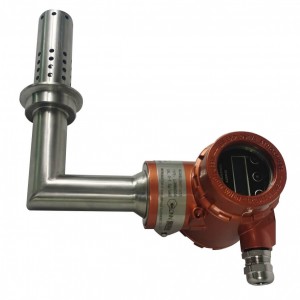
VI. Online Viscosity Measurement Technology
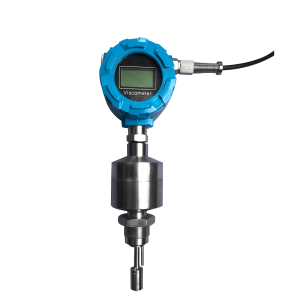
Lonnmeter Liquid Viscosity Meter Inline
To overcome the inherent limitations of laboratory testing, modern rubber processing requires robust, reliable instrumentation. Torsional resonator technology represents a significant advance in continuous, inline rheological sensing, capable of operating in the challenging environment of SBR production.
Devices such as the Lonnmeter Liquid Viscosity Meter Inline operate using a torsional resonator (a vibrating element) that is fully immersed in the process fluid. The device measures viscosity by quantifying the mechanical damping experienced by the resonator due to the fluid. This damping measurement is then processed, often alongside density readings, by proprietary algorithms to provide accurate, repeatable, and stable viscosity results.
This technology is uniquely suited for SBR applications due to its severe operational capabilities:
Robustness and Immunity: The sensors typically feature all-metal construction (e.g., 316L Stainless Steel) and hermetic, metal-to-metal seals, eliminating the need for elastomers which might swell or fail under high temperature and chemical exposure.
Wide Range and Fluid Compatibility: These systems can monitor viscosity of rubber compounds across an expansive range, from very low to extremely high values (e.g., 1 to 1,000,000+ cP). They are equally effective in monitoring non-Newtonian, single-phase, and multi-phase fluids, essential for SBR slurries and filled polymer melts.
Extreme Operating Conditions: These instruments are certified for operation across a broad spectrum of pressures and temperatures.
Advantages of real-time, online, multi-dimensional viscosity sensors (robustness, data integration)
The strategic adoption of real-time, inline sensing provides a continuous stream of material characterization data, moving production from intermittent quality checks to proactive process regulation.
Continuous Monitoring: Real-time data significantly reduces reliance on delayed, costly laboratory analyses. It allows immediate detection of subtle process deviations or batch variations in incoming raw materials, which is crucial for preventing downstream quality issues.
Low Maintenance: The robust, balanced resonator designs are designed for long-term use without maintenance or re-configuration, minimizing operational downtime.
Seamless Data Integration: Modern sensors offer user-friendly electrical connections and industry-standard communication protocols, facilitating direct integration of viscosity and temperature data into Distributed Control Systems (DCS) for automated process adjustments.
Selection Criteria for instrument used to measure viscosity in different SBR stages.
The selection of the appropriate instrument used to measure viscosity depends critically on the physical state of the material at each point in the rubber making process:
Solution/Slurry (Reactor): The requirement is to measure intrinsic or apparent slurry viscosity. Technologies include Side Stream Rheometers (SSR) which continuously analyze melt samples, or high-sensitivity torsional probes optimized for liquid/slurry monitoring.
High-Viscosity Compound (Mixing): Direct physical measurement is mechanically unfeasible. The optimal solution is the use of predictive soft sensors that correlate the highly accurate process inputs (torque, energy draw, temperature) of the internal mixer to the required quality metric, such as Mooney viscosity.
Polymer Melt (Pre-Extrusion): The final determination of flow quality requires a high-pressure sensor in the melt pipe. This can be achieved through robust torsional resonator probes or specialized inline capillary viscometers (such as the VIS), which can measure apparent melt viscosity at high shear rates relevant to extrusion, often correlating the data to MFR/MVR.
This hybrid sensing strategy, which combines robust hardware sensors where flow is confined and predictive soft sensors where mechanical access is limited, provides a high-fidelity control architecture necessary for effective rubber processing management.
VII. Strategic Implementation and Quantification of Benefits
Online Control Strategies: Implementing feedback loops for automated process adjustments based on real-time viscosity.
Automated control systems leverage real-time viscosity data to create responsive feedback loops, ensuring stable and consistent product quality beyond human capability.
Automated Dosing: In compounding, the control system can continuously monitor the compound consistency and automatically dose low-viscosity components, such as plasticizers or solvents, in precise amounts exactly when required. This strategy maintains the viscosity curve within a narrowly defined confidence range, preventing drift.
Advanced Viscosity Control: Because SBR melts are non-Newtonian and prone to disturbances in extrusion, standard Proportional-Integral-Derivative (PID) controllers are often insufficient for melt viscosity regulation. Advanced methodologies, such as Active Disturbance Rejection Control (ADRC), are necessary. ADRC treats disturbances and model inaccuracies as active factors to be rejected, providing a robust solution for maintaining target viscosity and ensuring dimensional precision.
Dynamic Molecular Weight Tuning: At the polymerization reactor, continuous data from the intrinsic viscosity measurement instrument is fed back into the control system. This enables proportional adjustments to the flow rate of the chain regulator, instantly compensating for minor deviations in reaction kinetics and ensuring the molecular weight of the SBR polymer remains within the narrow specification band necessary for the specific SBR grade.
Efficiency & Cost Gains: Quantifying improvements in cycle times, reduced rework, optimized energy and material usage.
The investment in online rheology systems yields direct, measurable returns that enhance the overall profitability of the process of rubber manufacturing.
Optimized Cycle Times: By utilizing viscosity-based end-point detection in the internal mixer, manufacturers eliminate the risk of over-mixing. A process that typically relies on fixed cycles of 25–40 minutes can be optimized to reach the required dispersion viscosity in 18–20 minutes. This operational shift can result in a 15–28% reduction in cycle time, translating directly into increased throughput and capacity without new capital investment.
Reduced Rework and Waste: Continuous monitoring allows for the immediate correction of process deviations before they result in large volumes of off-specification material. This capability significantly reduces costly rework and scrap material, improving material utilization.
Optimized Energy Use: By precisely curtailing the mixing phase based on the real-time viscosity profile, energy input is optimized solely to achieve proper dispersion. This eliminates the parasitic energy waste associated with over-mixing.
Material Utilization Flexibility: Targeted viscosity adjustment is vital when processing variable or non-virgin feedstocks, such as recycled polymers. Continuous monitoring allows for the fast adjustment of process stabilization parameters and targeted viscosity tuning (e.g., increasing or decreasing molecular weight via additives) to reliably meet the desired rheological targets, maximizing the utility of varied and potentially lower-cost materials.
The economic implications are substantial, as summarized in Table III.
Table III. Projected Economic and Operational Gains from Online Viscosity Control
| Metric | Baseline (Offline Control) | Target (Online Control) | Quantifiable Gain/Implication |
| Batch Cycle Time (Mixing) | 25–40 minutes (Fixed Time) | 18–20 minutes (Viscosity End-Point) | 15–28% Increase in Throughput; Reduced Energy Consumption. |
| Off-Specification Batch Rate | 4% (Typical Industry Rate) | <1% (Continuous Correction) | Up to 75% Reduction in Rework/Scrap; Reduced raw material loss. |
| Process Stabilization Time (Recycled Inputs) | Hours (Requires multiple lab tests) | Minutes (Fast IV/Rheo Adjustment) | Optimized material usage; improved ability to process variable feedstock. |
| Equipment Maintenance (Mixers/Extruders) | Reactive Failure | Predictive Trend Monitoring | Early fault detection; reduced catastrophic downtime and repair costs. |
Predictive Maintenance: Utilizing continuous monitoring for early fault detection and preventive actions.
Online viscosity analysis extends beyond quality control to become a tool for operational excellence and equipment health monitoring.
Fault Detection: Unexpected shifts in continuous viscosity readings that cannot be explained by upstream material variation can serve as an early warning signal for mechanical degradation within the machinery, such as wear in extruder screws, rotor deterioration, or the plugging of filters. This enables proactive and scheduled preventive maintenance, minimizing the risk of costly catastrophic failures.
Soft Sensor Validation: The continuous process data, including device signals and sensor inputs, can be used to develop and refine predictive models (soft sensors) for crucial metrics like Mooney viscosity. Furthermore, these continuous data streams can also serve as a mechanism to calibrate and validate the performance of other physical measurement devices in the line.
Material Variability Diagnosis: Viscosity trending provides a crucial layer of defense against raw material inconsistencies that are not captured by basic incoming quality checks. Fluctuations in the continuous viscosity profile can immediately signal variability in the molecular weight of the base polymer or inconsistent moisture content or quality in fillers.
The continuous collection of detailed rheological data—both from inline sensors and predictive soft sensors—provides the data foundation for establishing a digital representation of the rubber compound. This continuous, historical data set is essential for building and refining advanced empirical models that accurately predict complex final product performance characteristics, such as viscoelastic properties or fatigue resistance. This level of comprehensive control elevates the intrinsic viscosity measurement instrument from a simple quality tool to a core strategic asset for formulation optimization and process robustness.
VIII. Conclusion and Recommendations
Summary of key findings regarding viscosity measurement of rubber.
The analysis confirms that the conventional reliance on discontinuous, offline rheological testing (Mooney viscosity, MFR) imposes a fundamental limitation on achieving high precision and maximizing efficiency in modern, high-volume SBR production. Styrene Butadiene Rubber’s complex, non-Newtonian, and viscoelastic nature necessitates a fundamental shift in control strategy—moving away from single-point, delayed metrics toward continuous, real-time monitoring of apparent viscosity and the full rheological profile.
The integration of robust, purpose-built inline sensors, particularly those utilizing torsional resonator technology, coupled with advanced control strategies (such as predictive soft sensing in mixers and ADRC in extruders), enables closed-loop, automated adjustments across all critical phases: ensuring molecular weight integrity at polymerization, maximizing filler dispersion efficiency during mixing, and guaranteeing dimensional stability during final melt forming. The economic justification for this technological transition is compelling, offering quantifiable gains in throughput (15–28% reduction in cycle time) and substantial reductions in scrap and energy usage. Contact sales team for RFQ.